Best Space Books for Kids 2026: Ages 5 to 16, Ranked by Actual Science Quality
Best space books for children in 2026, age-matched from picture books to teen reference. Ranked by scientific accuracy, not Amazon rating — because a book that gets the science wrong does more harm than good.
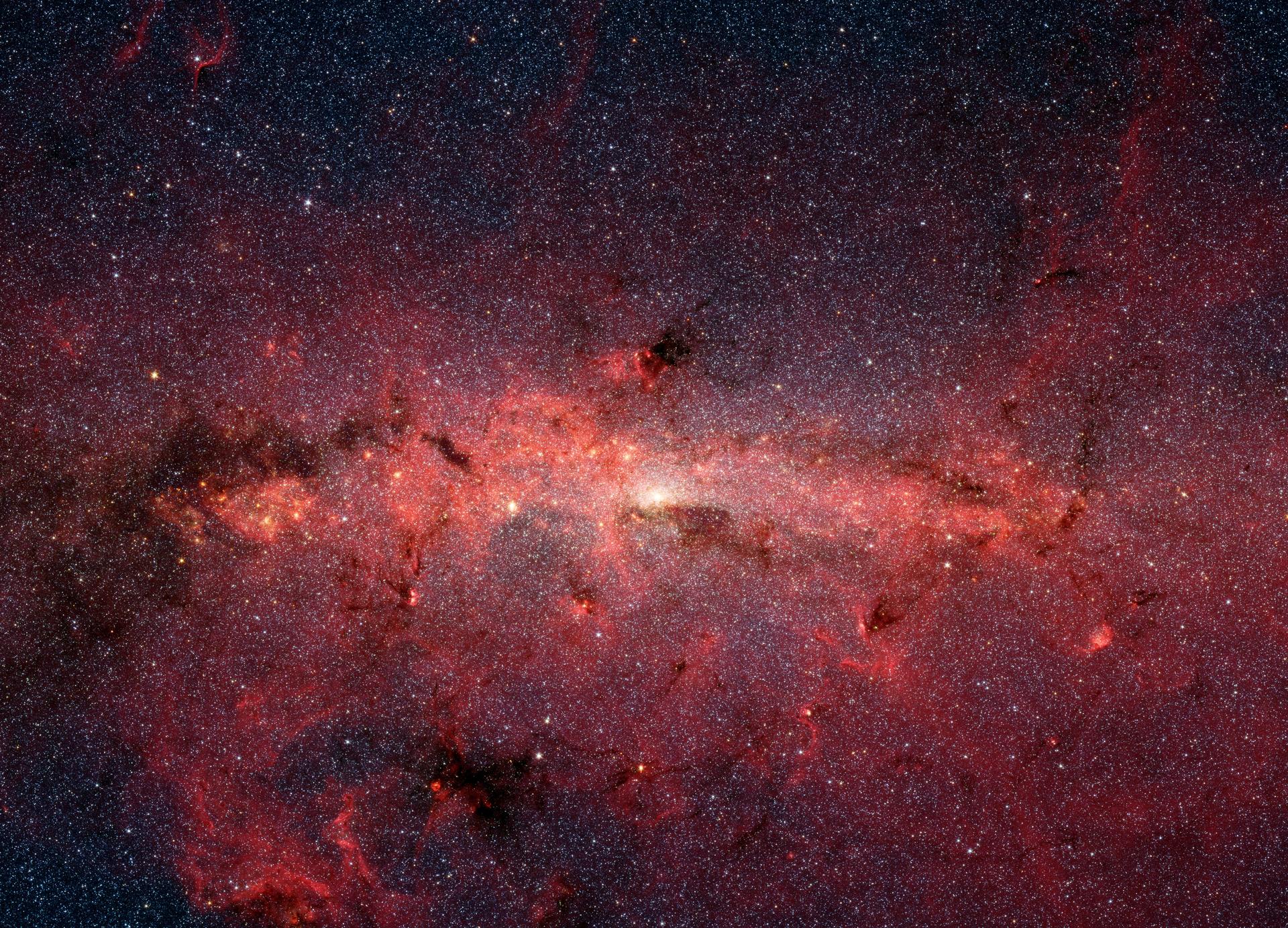
A space book that gets children excited about the universe is one of the best gifts in existence. A space book with inaccurate science, outdated information, or condescending text is one of the worst — it teaches wrong things confidently and often puts children off the subject entirely. This guide ranks by scientific quality first, presentation second, and Amazon rating not at all.
Eight books. Four age groups. Honest verdicts.
| Book | Price | Age | Best for |
|---|---|---|---|
| ”Look Up!” — Nathan Bryon | ~€8 | 4–7 | First space read |
| Usborne Big Book of Stars and Planets | ~€14 | 4–7 | Visual, large format, browsable |
| Professor Astro Cat’s Frontiers | ~€13 | 8–12 | Real science, well explained |
| National Geographic Kids Space Atlas | ~€18 | 8–12 | Complete visual reference |
| George’s Secret Key — Hawking | ~€8/vol | 8–12 | Story series with real physics |
| DK Eyewitness Space | ~€12 | 12–16 | Advanced visual reference |
| How to Be an Astronaut — L. Jackson | ~€14 | 12–16 | Real career guidance |
How to Judge a Children’s Space Book
Three questions determine whether a space book is worth buying:
Is the science current? Space science moves fast. A book published before 2019 may still describe Pluto as a planet without explanation, may not include New Horizons imagery, and certainly won’t include the James Webb Space Telescope discoveries. Check the publication or revision date.
Does it explain why, not just what? Books that list facts (“Neptune is the windiest planet”) without context (“Neptune’s winds reach 2,100 km/h because…”) miss the educational opportunity. The best children’s science books treat children as capable of understanding causation.
Does it give named scientists and real missions credit? “Scientists discovered…” is weaker than “NASA’s Cassini mission, which orbited Saturn for 13 years, revealed…”. Named missions, named scientists, and specific dates teach children how science actually works.
Ages 4–7: Picture Books That Get the Science Right
”Look Up!” by Nathan Bryon & Dapo Adeola (~€8)
Zeynep is obsessed with the sky. Her family keeps missing the meteor shower she’s been tracking. The story teaches patience, observation, and the idea that important things happen if you pay attention — wrapped in genuinely funny, warm storytelling and vivid illustration.
The astronomy is accurate (real meteor showers, real sky observation technique) without being heavy. The science is woven into character motivation, not listed in boxes. Most importantly, it centres a Black girl as the astronomy obsessive — representation that matters in STEM encouragement.
Age range: 4–8. An excellent read-aloud for 4–5, independent read for 6–8.
Price: ~€7–€9, Amazon EU
”The Usborne Big Book of Stars and Planets” (~€14)
Usborne’s oversized format (400mm × 300mm) allows full-spread illustrations of planetary surfaces, star formation, and spacecraft at scale. The visual impact is significant for young children who have not yet developed the habit of reading text-heavy science.
The science is generally accurate, updated to include JWST imagery in recent editions, and explanations are age-calibrated without being condescending. It does not go deep — it goes wide, covering everything from the Big Bang to space exploration briefly.
Best use: Browsing, not reading start-to-finish. Leave it somewhere accessible and children return to specific pages repeatedly.
Price: ~€12–€16, Amazon EU
Ages 8–12: The Core Reading Age
”Professor Astro Cat’s Frontiers of Space” by Dr. Dominic Walliman & Ben Newman (~€13)
Dr. Dominic Walliman is a quantum physicist by training. His Professor Astro Cat series does something rare: genuinely complex concepts (gravity wells, stellar evolution, the scale of the universe) presented with technical accuracy and without dumbing down. The cat framing is charming without being patronising.
This volume covers the solar system, stars, galaxies, space travel, and the search for extraterrestrial life. The illustrations are excellent. The science is solid. There is a companion volume (“Professor Astro Cat’s Astronomical Academy”) covering astrophysics fundamentals.
Why it stands out: It is written by someone who actually understands the science, not a science communicator describing science second-hand. The difference in conceptual clarity is noticeable.
Age range: 8–12. The stronger readers in this range will get more from it.
Price: ~€12–€15, Amazon EU
”National Geographic Kids Space Atlas” (National Geographic, ~€18)
National Geographic’s access to real mission photography makes this book genuinely different from illustrated alternatives. JWST images, Juno’s Jupiter imagery, New Horizons’ Pluto flyby data — all current-edition National Geographic atlases for this age group are updated with recent mission data.
The format is atlas-style: each body in the solar system gets a double-page spread with annotated imagery, key data, and mission highlights. It covers 200+ objects including asteroids, moons, and dwarf planets. Scale comparisons are consistent throughout.
Age range: 9–13. Works as reference rather than cover-to-cover reading.
Price: ~€16–€20, Amazon EU
”George’s Secret Key to the Universe” series by Lucy & Stephen Hawking (~€8 per book)
The late Stephen Hawking co-wrote this fiction series with his daughter Lucy specifically to introduce physics concepts to pre-teen readers. George uses a computer called Cosmos to travel through space while learning about black holes, dark matter, the Big Bang, and planetary science — each book including genuine physics explanations alongside the story.
The science is real: concepts are explained using the same physical principles Hawking used in academic work, just in language accessible to a 9-year-old. The story quality is adequate without being exceptional. The science quality is the reason to buy it.
Seven books in the series. Start with the first (“George’s Secret Key to the Universe”) and follow the child’s interest. Age range 8–13.
Price: ~€7–€9 per book, Amazon EU
Ages 12–16: Serious Reading for Serious Interest
”DK Eyewitness Space” (~€12)
The DK Eyewitness format — high-quality photography with annotated labels, no running narrative — works particularly well for space, where the photography from Hubble, JWST, and planetary missions is genuinely spectacular. Updated editions include JWST deep fields, Artemis programme context, and recent planetary mission data.
Strong for visual reference. Less strong for narrative understanding of how space science works as a discipline. Best as a complement to a more explanatory book, not as the sole space resource.
Price: ~€10–€14, Amazon EU
”How to Be an Astronaut and Other Space Jobs” by Libby Jackson (~€14)
Libby Jackson is the Human Spaceflight Programme Manager at the UK Space Agency. This is not a book by a science communicator — it is written by someone who knows the astronaut selection process, the training curriculum, and the operational reality of spaceflight.
The book covers 20+ careers in the space sector: astronaut, flight controller, space lawyer, space debris analyst, satellite engineer. For teenagers considering STEM careers, the specificity is genuinely valuable: job titles, required qualifications, realistic salaries, and named people currently working in each role.
Recommended age: 12–16, and any adult who wants to understand what working in the space sector actually looks like.
Price: ~€12–€16, Amazon EU
What to Avoid
Books published before 2018 without updated editions. The James Webb Space Telescope, the New Horizons Pluto flyby (2015), OSIRIS-REx at Bennu, the Perseverance rover, and recent gravitational wave detections are all absent from older editions. A book that doesn’t include JWST imagery in 2026 is teaching from an outdated picture of the universe.
Books that describe Pluto as the “ninth planet” without context. Pluto was reclassified in 2006. A book published in 2010 or later that still calls it the ninth planet is careless about accuracy in a way that probably extends to other claims.
“Fun facts” books with no explanatory depth. Lists of superlatives (“the biggest planet”, “the hottest planet”) without explanation of why create trivia knowledge, not scientific understanding. These books are easier to write and cheaper to produce, which is why there are so many of them.
The Complete Space Gift for a Child
For ages 5–8: “Look Up!” + a simple planisphere (~€8) for finding constellations.
For ages 9–12: “Professor Astro Cat’s Frontiers of Space” + Celestron FirstScope telescope + a clear night.
For ages 13+: “How to Be an Astronaut” + a subscription to ESA’s newsletter + honest conversation about what a career in space actually involves.
Some links on this page are affiliate links. If you purchase through them, Orion News earns a small commission at no extra cost to you.
Related articles
Green Propellant vs Hydrazine: How Arkadia Space's In-Orbit Test Changes Satellite Propulsion
Arkadia Space's in-orbit green propellant test validates a non-toxic hydrazine replacement for small satellites. Here's how high-performance green propellants compare to hydrazine — and why the industry is finally switching.
Read →AnalysisThe 25-Year Deorbit Rule: Why the Main Space Debris Standard Is Failing
The 25-year post-mission deorbit guideline was adopted in 2002 to control debris growth in LEO. Historical compliance has been ~50%. Mega-constellations of thousands of satellites have made the rule's underlying assumptions obsolete — and regulators are responding.
Read →GearBest LEGO Space Sets for Kids 2026: City, Creator and Technic Ranked
Best LEGO space sets for kids in 2026 — City Space, Creator 3-in-1 and junior Technic ranked by build quality, play value and educational content. Ages 5–14, EU prices.
Read →